When can I withdraw after stopping a lending bot?
Stopping a bot, cancelling an offer, receiving repayment and withdrawing are separate events. Completing one does not establish that the remaining steps are complete.
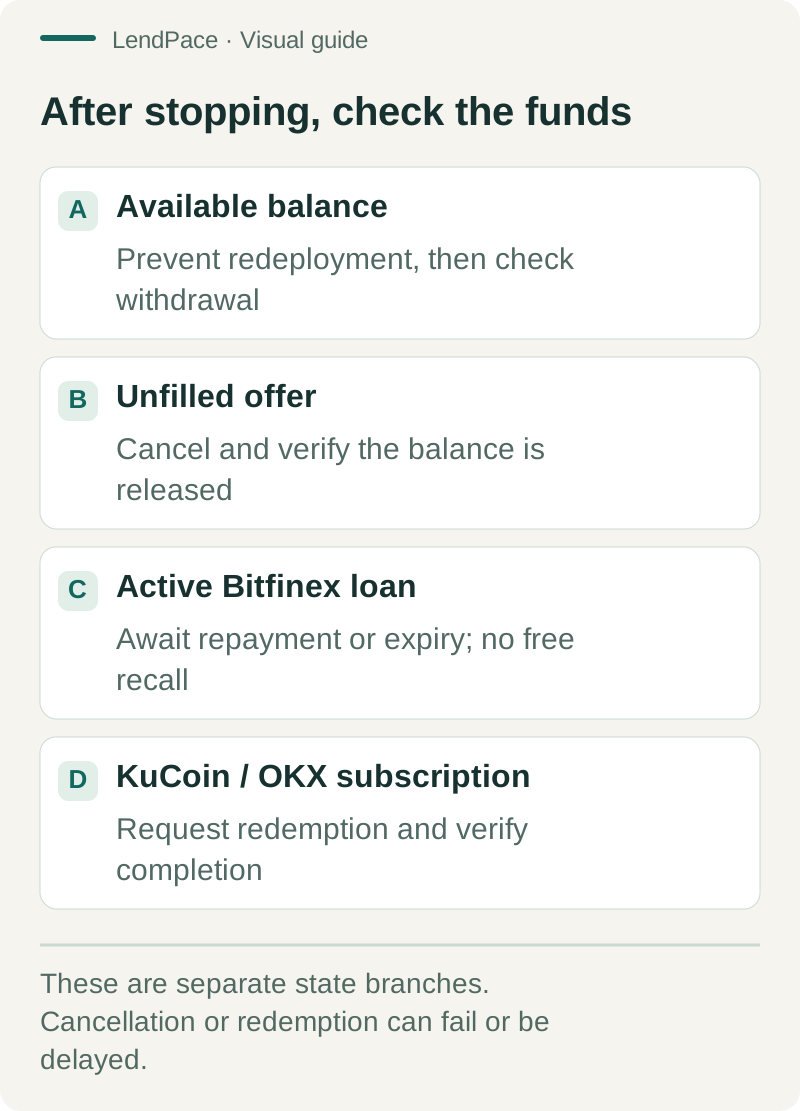
Follow the funds’ state
| State | Required check |
|---|---|
| Unused available funds | Prevent further automation, then follow withdrawal rules |
| Unfilled offer | Cancel and confirm the balance is released |
| Active Bitfinex loan | Await repayment or expiry; lenders cannot freely recall it |
| KuCoin or OKX subscription | Request redemption and verify completion |
| Unclear or stale display | Confirm directly with the exchange |
Exit sequence
Stop the correct exchange and currency bot. Check for pending exchange offers and native renewal settings. Reconcile active, redeeming and available amounts, completing exchange-side steps where needed. Only then withdraw using the exchange’s current network, address, limit and verification rules. Revoke the dedicated key when it is no longer needed.
If a key may be compromised, revoke it first and manage the account directly. For a routine exit, remember that deleting the key first can prevent the tool from cancelling offers for you.
Why orders may remain after stopping
Requests can fail because of connectivity, permissions or exchange conditions. “Stopped” describes automation state, not proof that funds are available. Pool liquidity can delay redemption. Early borrower repayment is possible, but not a reliable withdrawal schedule.
FAQ
Does subscription expiry return all capital?
No. It affects the service, not existing exchange loan terms. Plan verification before expiry instead of relying on automation to finish every exit step.
Related reading
- Crypto lending risks: principal, liquidity and automation limits
- What “LendPace does not hold assets” means for custody and API risk
Sources and verification date
Bitfinex Margin Lending · KuCoin Crypto Lending Pro · OKX Simple Earn Flexible
2026-11-03.
This is operational and educational information. Illustrations are not promised returns. Exchange, liquidity and asset-price risks remain.